



SSTR1
Somatostatin receptor 1 (SSTR1) is a seven-transmembrane G protein-coupled receptor that mediates the biological effects of somatostatin and exhibits higher affinity for somatostatin-14 than somatostatin-28[1][2]. SSTR1 primarily couples to pertussis toxin-sensitive G proteins and contributes to inhibition of adenylyl cyclase signaling, thereby regulating secretory and cellular responses in multiple tissues[1][3]. As a member of the somatostatin receptor family, SSTR1 participates in the broader inhibitory network through which somatostatin controls hormone secretion, cell proliferation, and tissue homeostasis[3][4]. Mechanistically, activation of SSTR1 is associated with anti-secretory, anti-proliferative, and anti-migratory effects, supporting its role in cellular growth control and signaling regulation[4]. In disease-related settings, somatostatin receptors are expressed in numerous neuroendocrine and other tumor types, and emerging clinical evidence indicates that reduced SSTR1 expression is associated with androgen receptor signaling inhibitor resistance and poorer overall survival in metastatic castration-resistant prostate cancer[4]. Compared with related receptor isoforms, SSTR1 belongs to a distinct somatostatin receptor subclass that differs from SSTR2, SSTR3, and SSTR5 in ligand recognition and reactivity toward somatostatin analogs, highlighting subtype-specific pharmacology and signaling properties[3]. Structural studies further demonstrate isoform-dependent differences in ligand-binding interactions across the five somatostatin receptors, providing a framework for the development of subtype-selective compounds. For experimental applications, selective SSTR1 agonists and antagonists have been developed and are used to investigate receptor-specific signaling, secretion control, and antiproliferative responses in cellular and disease models[5].
References:
- [1]. Uniprotkb.
- [2]. Zhu X, et al. Somatostatin receptor 1 (SSTR1) expression as a potential predictive biomarker for response to androgen receptor signaling inhibitor (ARSI) therapy in metastatic castration-resistant prostate cancer (mCRPC)[J]. 2024.
- [3]. Cakir M, et al. Somatostatin receptor biology in neuroendocrine and pituitary tumours: part 1--molecular pathways. J Cell Mol Med. 2010;14(11):2570-2584. [Content Brief]
- [4]. Wikipedia.
- [5]. Hommer A, et al. Estimation of ocular rigidity based on measurement of pulse amplitude using pneumotonometry and fundus pulse using laser interferometry in glaucoma. Invest Ophthalmol Vis Sci. 2008 Sep;49(9):4046-50. [Content Brief]
All Product Categories
-
SSTR1 Related Products (10)
Related Products (10)

-
Cortistatin-14
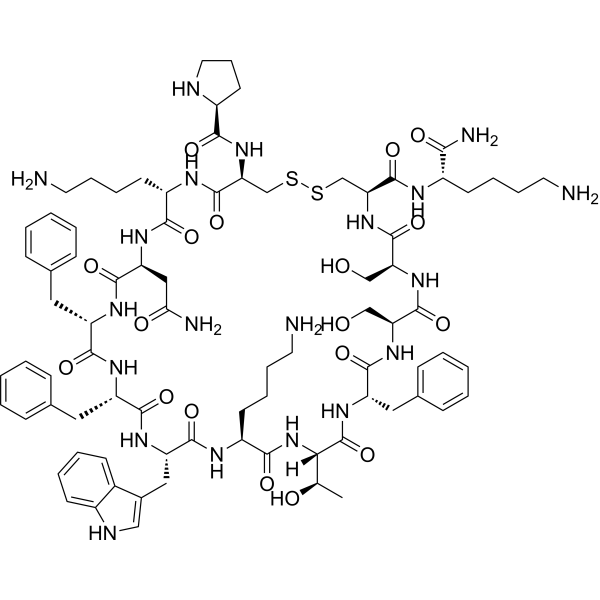 0 ImagesCortistatin-14 is a neuropeptide that shares structural similarities with somatostatin, working by binding to somatostatin receptors (sst1-sst5). Cortistatin-14 (TFA) has anticonvulsant, neuroprotective effects, and significant anti-inflammatory properties.
-
CH 275
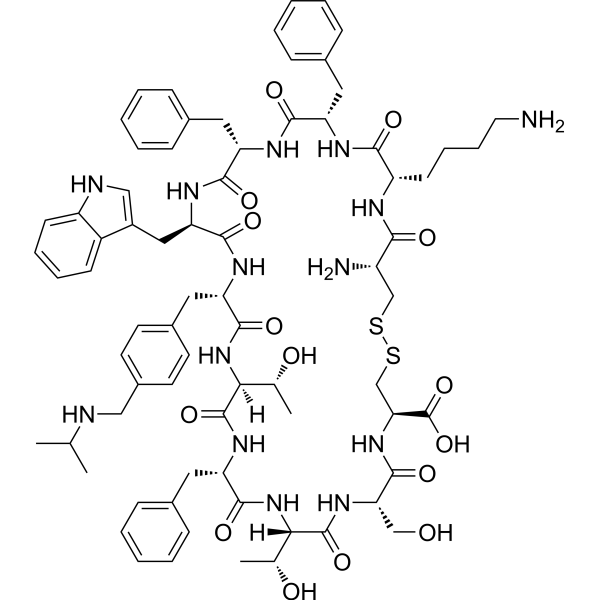 0 ImagesCH 275 is a peptidic somatostatin analog that acts as an agonist of SST1 (IC50 = 30.9 nM, Ki = 52 nM). The IC50 values of CH 275 for sst3, sst4, sst2, and sst5 are 345 nM, >1 μM, >10 μM, and >10 μM, respectively. CH 275 binds to SSTR1 via the IAmp9-Asp137 ion pair interaction and the hydrophobic interaction between the isopropyl group of IAmp9 and Leu107, and reduces the extracellular acidification rate. CH 275 induces weak sst1 internalization, exerts immunosuppressive effects on macrophages, and decreases macrophage viability, MCP-1 expression/secretion, and IL-8 secretion, but does not alter proMMP-9 secretion or IL-8 mRNA levels. CH 275 reduces hippocampal β-amyloid levels and alleviates plaque pathology without inducing hippocampal microglial activation. CH 275 is used in research on Alzheimer's disease, Parkinson's disease, and depression.
-
Cyclosomatostatin
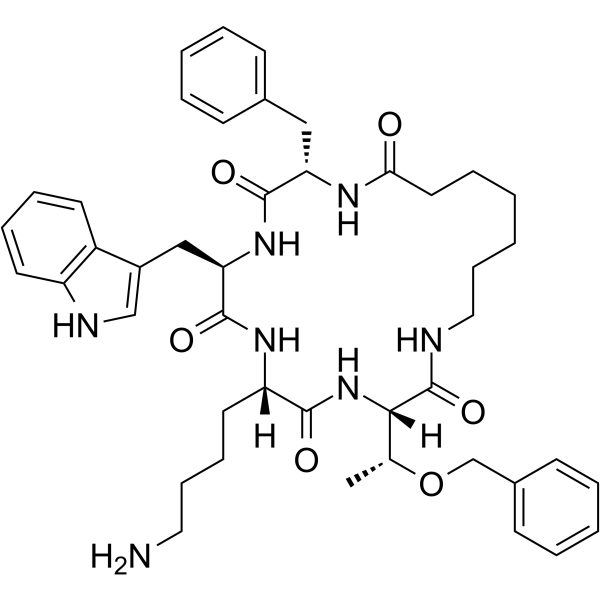 0 ImagesCyclosomatostatin is a non-selective somatostatin receptor antagonist that blocks SSTR1-5-mediated signaling. Cyclosomatostatin decreases the ALDH+ stem cell population and sphere formation without affecting cell viability, and reduces cell proliferation. Cyclosomatostatin activates opioid receptors. Cyclosomatostatin can be used for research on arthritis and colorectal cancer.
-
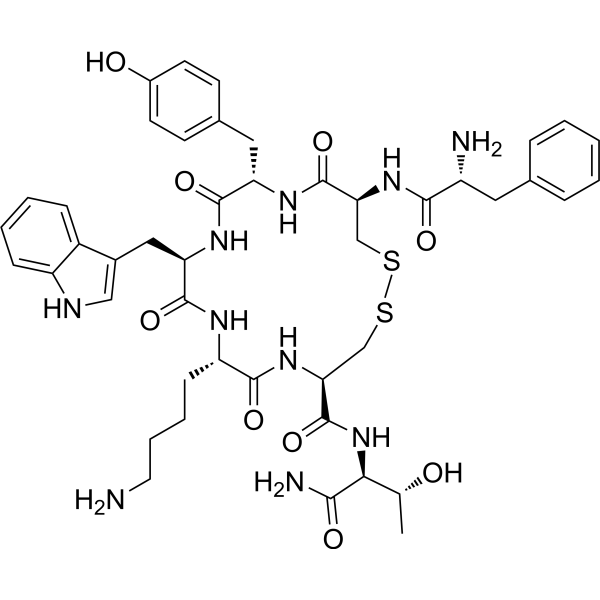
PRL 2915
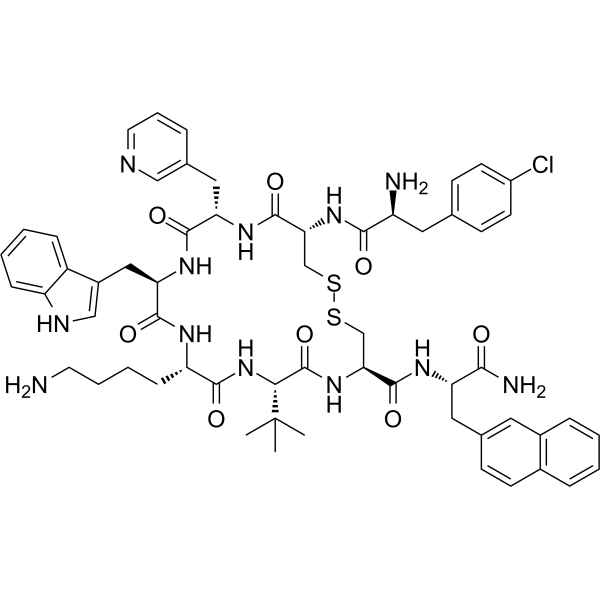 0 ImagesPRL 2915 is a potent human somatostatin subtype 2 receptor (hsst2) antagonist with a Ki of 12 nM.

-
Cortistatin-29 (reduced)
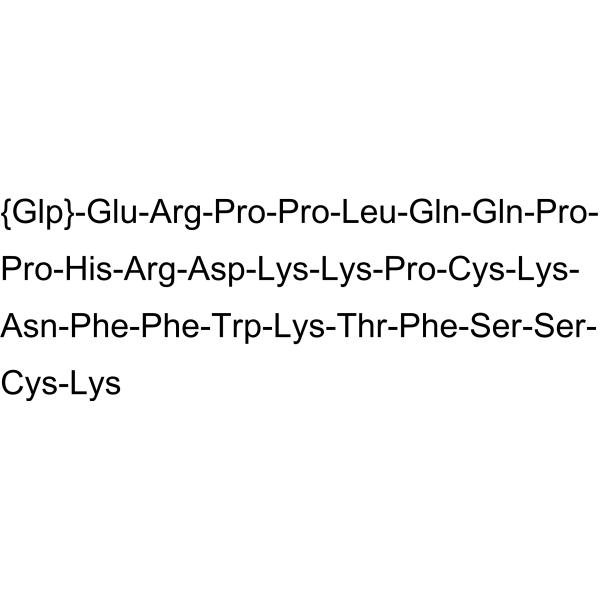 0 ImagesCat. No.: HY-P3618Purity: 98.12%Cortistatin-29 is a neuropeptide. Cortistatin-29 alleviates neuropathic pain. Cortistatin-29 binds all somatostatin (SS) receptor subtypes with high affinity and shows IC50 values of 2.8 nM, 7.1 nM, 0.2 nM, 3.0 nM, 13.7 nM for SSTR1, SSTR2, SSTR3, SSTR4, SSTR5, respectively. Cortistatin-29 shows anti-fibrotic effects.
-
PRL 3195
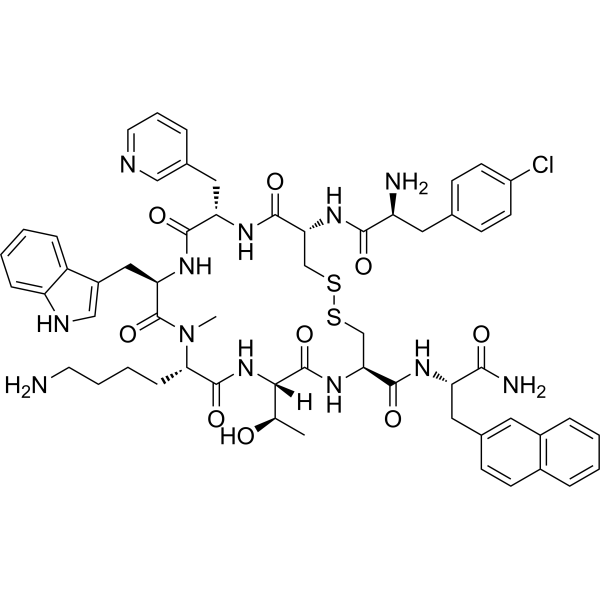 0 ImagesCat. No.: HY-P4469CAS No.: 341519-04-8PRL 3195 is a somatostatin receptor antagonist with Kis of 6, 17, 66, 1000 and 1000 nM for human somatostatin receptors (sst5, sst2, sst3, sst1 and sst4, respectively).
-
Cyclosomatostatin TFA
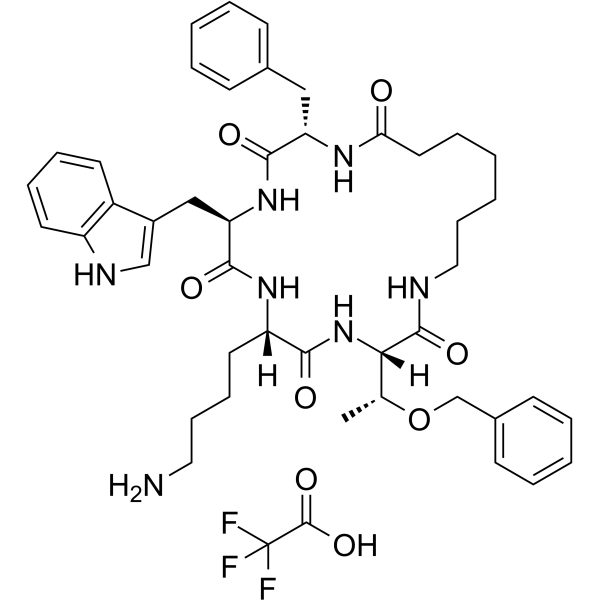 0 ImagesCat. No.: HY-P1201ACyclosomatostatin TFA is a non-selective somatostatin receptor antagonist that blocks SSTR1-5-mediated signaling. Cyclosomatostatin TFA decreases the ALDH+ stem cell population and sphere formation without affecting cell viability, and reduces cell proliferation. Cyclosomatostatin TFA activates opioid receptors. Cyclosomatostatin TFA can be used for research on arthritis and colorectal cancer.
-
Cortistatin-29 (rat)
 0 ImagesCat. No.: HY-P2150CAS No.: 1815618-17-7Cortistatin-29 is a neuropeptide. Cortistatin-29 alleviates neuropathic pain. Cortistatin-29 binds all somatostatin (SS) receptor subtypes with high affinity and shows IC50 values of 2.8 nM, 7.1 nM, 0.2 nM, 3.0 nM, 13.7 nM for SSTR1, SSTR2, SSTR3, SSTR4, SSTR5, respectively. Cortistatin-29 shows anti-fibrotic effects.



